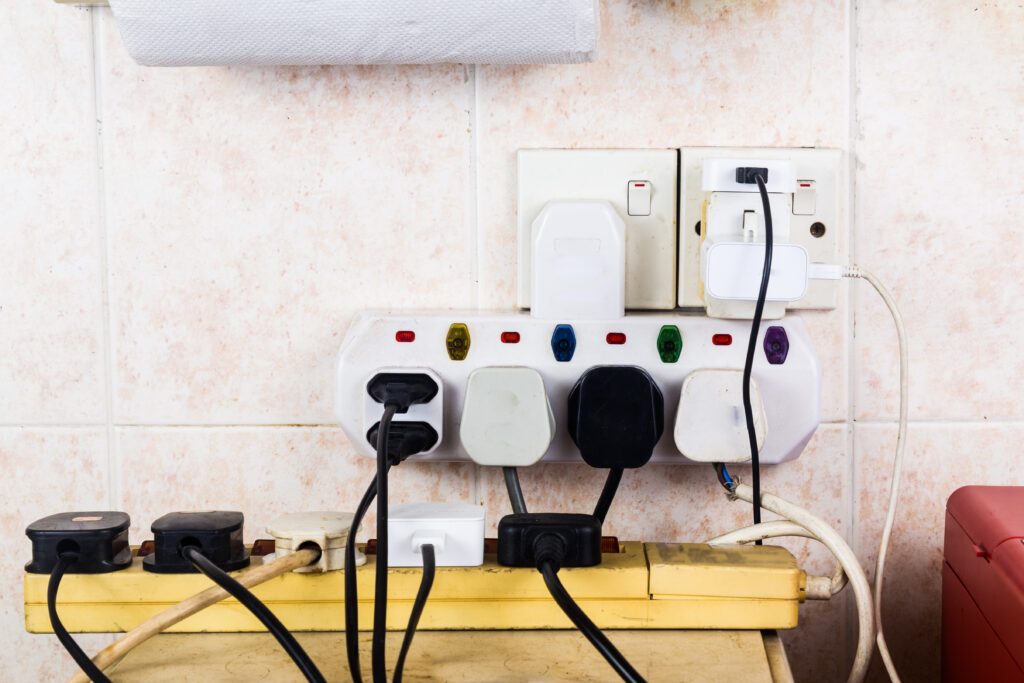
There are few things more frustrating than a consumer unit that keeps tripping, especially when it takes out the kitchen or the heating with it. Most people discover the problem mid-way through cooking dinner, which seems to be some kind of unwritten law of electrical faults.
The good news is that a tripping consumer unit is usually the system working exactly as it should, protecting you from a fault. The challenge is finding out what’s causing it. This guide explains the most common reasons, what you can safely check yourself, and when to call in a qualified electrician.
Quick Answer: Why Does a Consumer Unit Keep Tripping?
A consumer unit may trip repeatedly because of:
- An overloaded circuit (too many appliances on one circuit)
- A faulty or failing appliance
- Damaged wiring or a loose connection
- A faulty RCD (residual current device)
- Moisture or water ingress near electrical fittings
- An earth fault somewhere in the circuit
If the same breaker keeps tripping and you can’t identify the cause, an electrician should inspect the installation.
How a Consumer Unit Works
Your consumer unit (sometimes still called a fuse board) is the heart of your home’s electrical system. It contains:
- Circuit breakers (MCBs): protect individual circuits (sockets, lighting, cooker, etc.)
- Residual Current Devices (RCDs): protect against electric shock by detecting earth faults
- Main switch: isolates the whole property
When a fault is detected, the relevant breaker or RCD trips to cut the power to that circuit. This is a safety feature, not a flaw. The problem is when it trips repeatedly with no clear reason, that’s when investigation is needed.
Common Causes of Tripping
Overloaded Circuits
Every circuit has a maximum load it can carry. If you’ve plugged too many high-demand appliances into the same circuit (kettles, microwaves, toasters, and a fan heater all on one ring main, for example), the breaker will trip to prevent the cable from overheating.
The fix here is often straightforward, spread high-wattage appliances across different circuits, or have a new circuit added for a specific use.
Faulty Appliances
A single faulty appliance is one of the most common causes of tripping. If the RCD trips as soon as you plug something in, the appliance itself is likely the culprit. Common offenders include:
- Washing machines and tumble dryers
- Dishwashers
- Electric heaters
- Kettles and toasters with damaged elements
- Old electric lawn mowers
Testing this is simple, unplug appliances one by one and see if the RCD holds when you reset it. If it does, the last appliance you unplugged is the problem.
Damaged Wiring
Wiring can be damaged by rodents, DIY work, nails through cables, or simply age. Even a small nick in a cable’s insulation can cause an earth fault and trip the RCD. This type of fault usually needs professional investigation to locate and repair safely.
A Faulty RCD or Breaker
Occasionally, the RCD or a circuit breaker itself develops a fault and becomes oversensitive, tripping even when there’s no real problem. If you’ve eliminated appliances and can’t find an obvious cause, this is worth checking.
Moisture or Damp
Water and electricity are not friends. Moisture inside a socket, switch, or external fitting can cause the RCD to trip, particularly in kitchens, bathrooms, and outdoor circuits. If you’ve had any flooding, a leak, or condensation issues, this should be investigated promptly.
Earth Faults
An earth fault occurs when electricity takes an unintended path to earth, often through a person or a piece of equipment. The RCD is specifically designed to detect these and trip within milliseconds. Persistent earth fault trips should always be investigated by a professional.
How To Identify Which Circuit Is Affected
Open your consumer unit and look at the breaker positions. Each should be labelled, lighting, sockets, cooker, upstairs, downstairs, and so on. Whichever breaker or RCD has flipped to the off position is your starting point.
If the RCD (usually a wider switch covering multiple circuits) has tripped, the fault could be on any of the circuits it covers.
What You Can Check Yourself
Before calling an electrician, here’s what you can safely do:
1. Reset the breaker: Switch the tripped breaker or RCD back to the on position. If it immediately trips again, there’s an active fault.
2. Unplug all appliances on that circuit: Unplug everything connected to the affected circuit, then try resetting. If it holds, plug appliances back in one at a time to identify the faulty one.
3. Check for obvious damage: Have a look around, scorch marks near sockets, a visibly damaged plug or cable, or a recently flooded room are all useful clues.
4. Try a different socket: If a specific appliance seems to be causing the trip, try it in a different room on a different circuit to confirm.
Do not attempt to open consumer units, replace breakers, or inspect internal wiring yourself. This must be done by a qualified electrician.
When To Call a Professional
You should call a qualified electrician if:
- The same breaker or RCD trips repeatedly even with appliances unplugged
- The consumer unit trips and won’t reset at all
- You notice any burning smells, scorch marks, or warm sockets
- There has been water ingress near any electrical fitting
- The consumer unit is old, uses rewireable fuses, or has no RCD protection
- You’re not confident identifying the cause yourself
Repeated tripping is the system telling you something is wrong. It’s always better to find out sooner rather than later.
Our electricians cover Gravesend, Dartford, and the wider Kent and Medway area. We carry out fault finding, consumer unit replacements, and full rewires, whatever the job requires.
Typical Costs
| Work | Approximate Cost |
|---|---|
| Electrical fault finding | £80–£200 |
| Single circuit breaker replacement | £80–£150 |
| RCD replacement | £100–£200 |
| Consumer unit replacement | £400–£700 |
| Additional circuit installation | £200–£500 |
An electrician will usually need to inspect the installation before providing an accurate quote, particularly for fault finding.
FAQs
Is it dangerous if my consumer unit keeps tripping?
The tripping itself is a safety mechanism, the system is doing its job. However, the underlying cause may be dangerous, so repeated tripping should always be investigated.
Why does my RCD trip in the middle of the night?
Some appliances (such as fridges, freezers, or heating systems) cycle on automatically at night. If one of these has a developing fault, it can cause overnight trips. Try unplugging appliances one by one to identify the cause.
Can I reset the consumer unit myself?
Yes, switching a tripped breaker back to the on position is safe to do. If it immediately trips again or won’t stay on, call an electrician rather than continuing to reset it.
Do I need a new consumer unit?
Not necessarily. Older boards with rewireable fuses, or boards without RCD protection, should be upgraded. But a modern board that’s tripping due to a faulty appliance or circuit fault doesn’t always need replacing, it just needs the fault fixing.
What is the difference between an MCB and an RCD?
An MCB (miniature circuit breaker) protects a specific circuit from overcurrent or short circuits. An RCD (residual current device) monitors the balance of current flowing through a circuit and trips if it detects a leak to earth, protecting against electric shock. Many modern consumer units combine both functions in an RCBO on each circuit.
How long does consumer unit replacement take?
Most consumer unit replacements are completed within a day. The electrician will need to isolate the supply, which means the property will be without power for a period during the work.
Need an Electrician in Kent?
If your consumer unit keeps tripping and you can’t identify the cause, our qualified electricians can carry out a thorough fault investigation and advise on the best course of action.
We work across Gravesend, Dartford, Medway, Maidstone, and the wider Kent area.
Contact us today, we’re happy to help.
Also see: Consumer Unit Replacement in Gravesend | Signs Your Home May Need Rewiring | Electrical Services in Dartford