Most people don’t give their home’s wiring a second thought, until something goes wrong. And by the time something does go wrong with old or failing electrics, it can range from mildly inconvenient to genuinely dangerous.
The age of your wiring, the condition of your consumer unit, and a few telltale signs around the house can tell you a lot about whether it’s time to get a professional in. In this guide, we’ll explain what to look out for, what rewiring involves, and when you really shouldn’t put it off any longer.
Quick Answer: Signs Your Home May Need Rewiring
Your home may need rewiring if you notice any of the following:
- Flickering or dimming lights with no obvious cause
- Burning smells or scorch marks near sockets or switches
- Fuses blowing or the consumer unit tripping repeatedly
- Sockets or light switches that feel warm to the touch
- Old rubber-coated or fabric-covered wiring (pre-1970s)
- Regularly blowing lightbulbs
- A consumer unit that still uses old-style rewireable fuses
If your property is over 25–30 years old and hasn’t had an electrical inspection, it’s well worth getting one arranged.
How Old Is Too Old?
Electrical installations don’t last forever. As a rough guide:
- Pre-1960s wiring: Almost certainly needs replacing. Rubber-insulated cables become brittle and dangerous over time.
- 1960s–1980s wiring: Likely outdated and may not meet current regulations. PVC wiring from this era can be okay, but the consumer unit and earthing arrangements often need upgrading.
- 1990s onwards: Generally more likely to be compliant, but still worth having tested if no recent inspection certificate exists.
If you’ve recently bought a property and don’t know the history of the electrics, an Electrical Installation Condition Report (EICR) will tell you everything you need to know.
Warning Signs To Look Out For
Flickering or Dimming Lights
Occasional flickering when an appliance kicks in (like a fridge compressor) can be normal. But persistent flickering, dimming lights, or lights that occasionally go out entirely can point to loose connections or deteriorating wiring.
Burning Smells or Scorch Marks
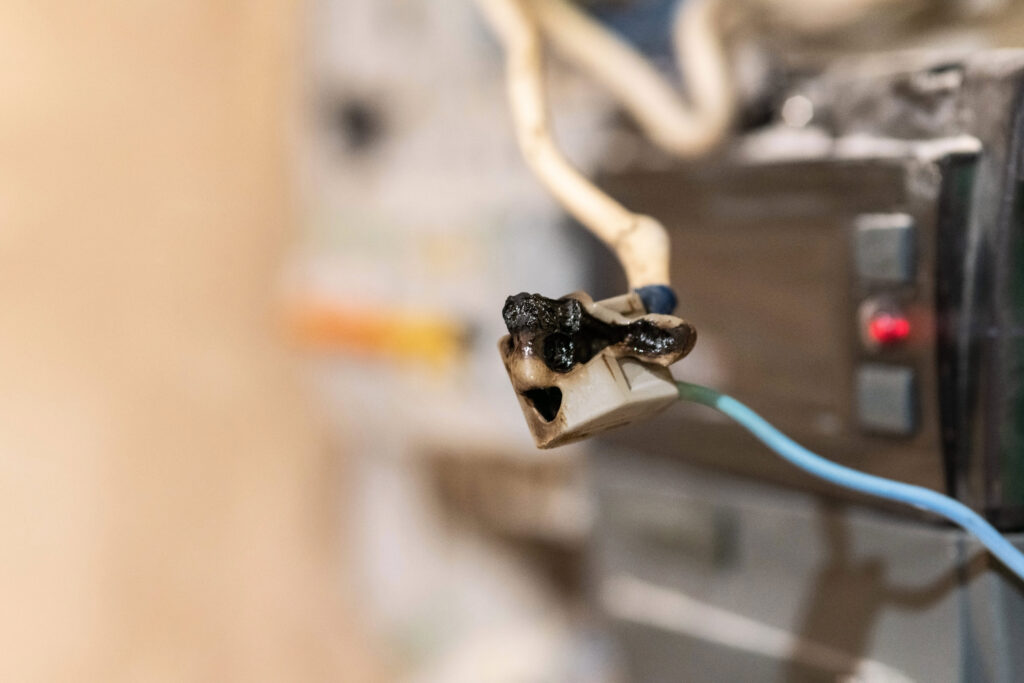
This one should never be ignored. A burning smell from a socket, switch, or fuse board, even if brief, is a serious warning sign. Scorch marks or discolouration around outlets suggest overheating, which is a potential fire risk.
Sockets and Switches That Feel Warm
Sockets and switches should never feel warm to the touch when not in use. If they do, there may be a fault in the wiring or the socket itself.
Tripping Consumer Unit
The consumer unit (fuse board) is designed to trip when there’s a problem, that’s exactly what it’s supposed to do. But if it trips repeatedly, or certain circuits trip for no clear reason, this suggests an underlying fault that needs investigating.
Old-Style Wiring or Fuses
If your consumer unit still uses old rewireable fuses (rather than modern circuit breakers), this is a strong sign the installation is overdue for an upgrade. Similarly, if you spot cables with fabric or rubber casing anywhere in the property, these should be assessed by a qualified electrician.
Too Few Sockets
This isn’t a safety fault in itself, but if you find yourself relying heavily on extension leads and multi-adapters throughout the house, it’s worth adding more sockets as part of any electrical work, overloaded extension leads are a common cause of electrical fires.
What an Electrician Will Check
A qualified electrician carrying out an EICR will inspect:
- The consumer unit and its protective devices
- Earthing and bonding arrangements
- The condition of wiring throughout the property
- Sockets, switches, and light fittings
- Any visible signs of damage, deterioration, or unsafe installation
The report will grade any issues found, from immediate danger (C1) to recommendations (C3), and give you a clear picture of what needs attention.
What Does Rewiring Involve?
A full rewire involves replacing all of the cables throughout the property. In practice this means:
- First and second fix, cables run through floors, walls, and ceilings
- New consumer unit installation
- New sockets, switches, and light fittings throughout
- Inspection and testing before sign-off
It’s a significant job and yes, there will be some disruption, cables need to be run through walls and floors. But a good electrician will work tidily and minimise the mess where possible. Most homeowners take the opportunity to redecorate afterwards anyway, which is often easier once the wiring work is done.
A typical three-bedroom house rewire in Kent takes around 5–10 days depending on access and complexity.
When To Call a Professional
You should contact a qualified electrician immediately if:
- You can smell burning near any electrical fitting or the consumer unit
- A socket or switch feels hot or shows scorch marks
- Lights flicker persistently or circuits trip repeatedly
- You’ve had a flood or water ingress near electrical fittings
- Your property has never had an EICR and is over 25 years old
For landlords, an EICR is now a legal requirement, properties must be tested at least every five years, and a valid certificate must be provided to tenants.
Our NICEIC-registered electricians cover Gravesend, Dartford, and the wider Kent area. If you’re unsure about the condition of your electrics, we’re happy to take a look and give you an honest assessment.
Typical Costs
Costs vary depending on property size, accessibility, and the scope of work required:
| Work | Approximate Cost |
|---|---|
| EICR (condition report) | £150–£300 |
| Consumer unit replacement | £400–£700 |
| Partial rewire (e.g. one floor) | £800–£2,000 |
| Full rewire – 2-bed property | £2,500–£4,000 |
| Full rewire – 3-bed property | £3,500–£5,500 |
| Full rewire – 4-bed property | £5,000–£8,000+ |
These figures are approximate. An electrician will need to assess the property before providing an accurate quote.
FAQs
How do I know if my home needs rewiring?
The clearest signs are flickering lights, warm sockets, scorch marks, repeatedly tripping circuits, or visibly old wiring. If in doubt, book an EICR, it will give you a definitive answer.
Is rewiring a house very disruptive?
There will be some disruption as cables are run through walls and floors. However, a competent electrician will work as neatly as possible. Most homeowners plan some redecoration after the work is completed.
Can I live in my home while it’s being rewired?
In most cases, yes, though sections of the property will be without power at various stages. For larger properties, some homeowners prefer to stay elsewhere during the main works.
Is rewiring covered by home insurance?
Generally not as standard. However, failing to address known electrical hazards could affect a claim if something goes wrong. It’s always worth checking your policy.
How long does a rewire last?
Modern wiring is expected to last 25–40 years or more, depending on the quality of materials and workmanship. Having an EICR every 10 years (or between owners/tenants) helps ensure everything remains safe and compliant.
Do I need to notify my local council before rewiring?
Electrical work must comply with Part P of the Building Regulations. A registered electrician (such as one registered with NICEIC or NAPIT) can self-certify their work, so you won’t need to notify the council separately. Always use a registered contractor.
Need an Electrician in Kent?
Whether you need an EICR, a consumer unit upgrade, or a full rewire, our qualified electricians are based locally and work across Gravesend, Dartford, Medway, and the wider Kent area.
Contact us today for honest advice and a no-obligation quote.
Also see: Consumer Unit Replacement in Gravesend | Electrical Services in Dartford | Emergency Electrician in Kent