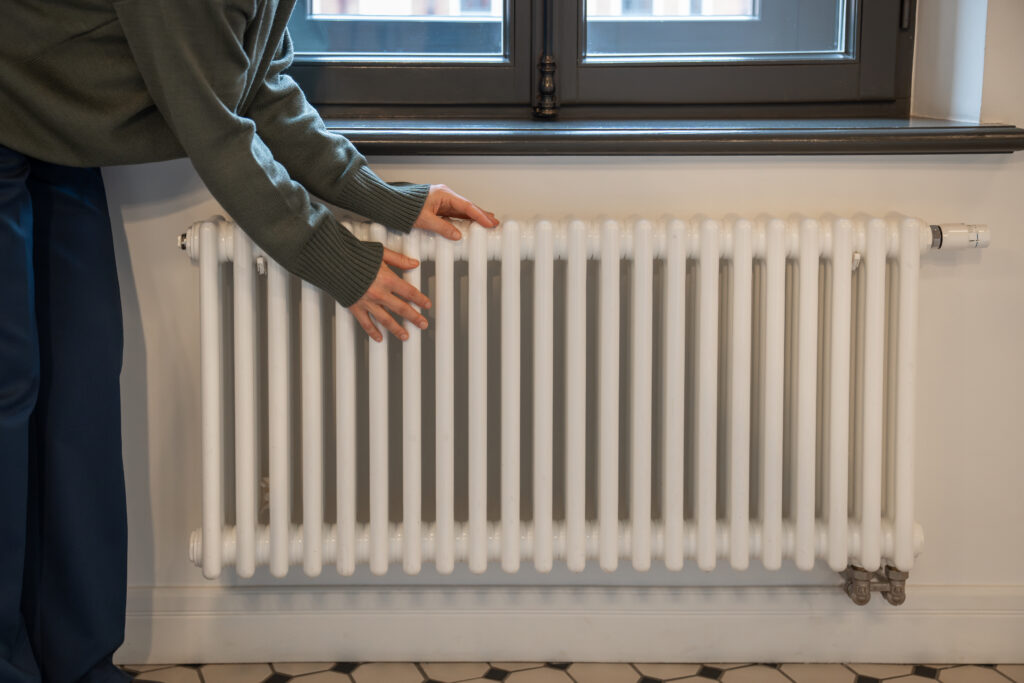
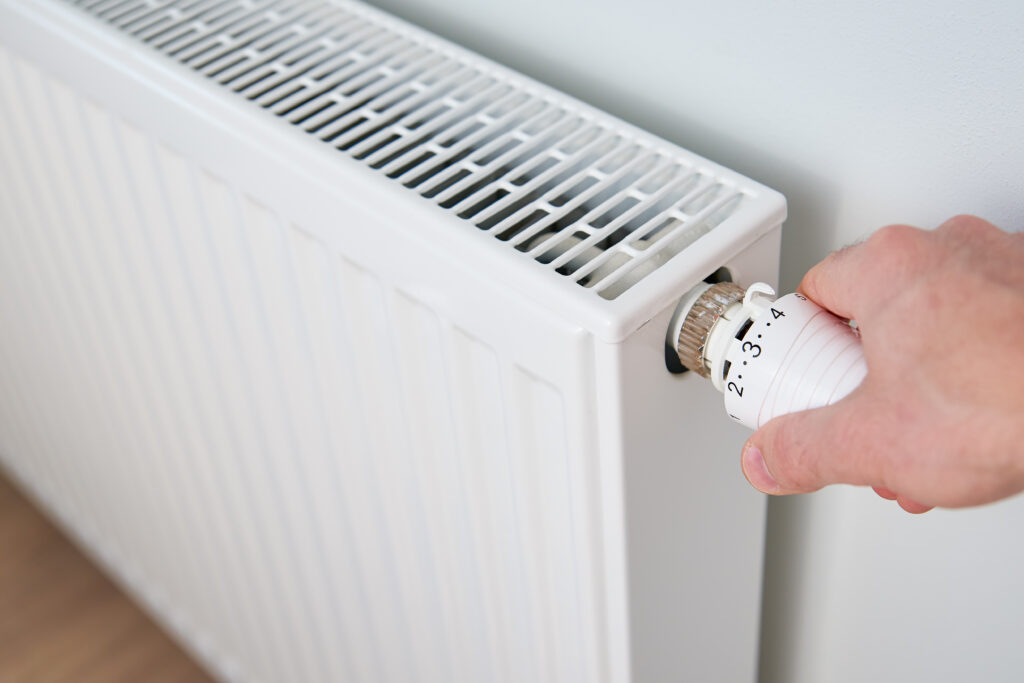
If some of your radiators are warm at the bottom but cold at the top, or just not heating up properly despite the boiler running fine, there is a good chance they need bleeding. It is one of those jobs that sounds more technical than it is. Most homeowners can bleed a radiator themselves in under five minutes, and in many cases it makes an immediate difference to how well the heating works.
This guide walks you through the process clearly and safely, and explains when bleeding alone might not be enough.
Quick Answer: How Do You Bleed a Radiator?
To bleed a radiator:
- Turn the heating off and let the system cool down
- Locate the bleed valve (a small square or slotted valve at the top corner of the radiator)
- Hold a cloth beneath it and use a radiator bleed key to turn the valve anticlockwise by about a quarter turn
- Let the air escape until water starts to trickle out, then close the valve
- Check the boiler pressure and top up via the filling loop if it has dropped below 1 bar
Why Do Radiators Need Bleeding?
Over time, small amounts of air become trapped inside radiators. This air rises to the top of the radiator and creates a pocket that prevents hot water from filling the full height of the panel. The result is a radiator that feels cold at the top and warm at the bottom, or one that does not get as hot as it used to.
Air can enter the system in several ways: through the natural process of water heating and cooling, after maintenance work, when system pressure drops low enough to allow air in, or as a byproduct of corrosion inside the pipework producing small amounts of hydrogen gas.
Bleeding releases this trapped air and allows hot water to fill the radiator completely.
Signs a Radiator Needs Bleeding
Look out for:
- The top of the radiator is cold while the bottom is warm
- The radiator takes a long time to heat up
- You can hear a gurgling or trickling sound from inside the radiator
- The room feels cooler than it should despite the boiler being on
- Some radiators in the house heat up fine while others do not
If all of your radiators are cold or slow to heat up, the issue may be something other than trapped air (such as low boiler pressure, a failing pump, or sludge build-up). See our guide on power flushing in Kent if you suspect a sludge problem.
What You Will Need
You do not need any specialist tools. Before you start, make sure you have:
- A radiator bleed key (a small inexpensive tool available from any hardware or DIY store)
- A cloth or small container to catch any drips
- Access to your boiler pressure gauge (to check pressure after bleeding)
Some newer radiators have a slot for a flat-head screwdriver rather than a bleed key. Check yours before buying anything.
Step-by-Step: How to Bleed a Radiator
Step 1: Turn the Heating Off
Always bleed radiators with the heating switched off and the system cooled down. If you bleed while the pump is running, you can draw more air into the system rather than releasing it. The water inside the radiators will also be very hot, so letting things cool first is safer.
Step 2: Identify Which Radiators Need Bleeding
Feel each radiator from the top down. If the top third or half is noticeably cooler than the bottom, that radiator has trapped air and needs bleeding. Make a mental note of which ones to do.
Step 3: Locate the Bleed Valve
The bleed valve is a small square nut or slotted bolt located at the top of the radiator, usually at one end. It will not look like much, but it is the access point for releasing the air.
Step 4: Open the Valve
Hold your cloth or container beneath the valve to catch any drips. Insert the bleed key and turn it anticlockwise slowly, just a quarter to half a turn. Do not remove the valve entirely.
You should hear a hissing sound as air escapes. This is normal and means it is working.
Step 5: Close the Valve
When the hissing stops and a steady trickle of water appears (rather than air mixed with water), close the valve by turning the key clockwise. Do not overtighten.
The water that comes out may be discoloured (black or brown). This is common in older systems and indicates corrosion products in the water. It is harmless in small amounts but worth mentioning to a heating engineer if you see it regularly.
Step 6: Repeat for Each Radiator
Work through each radiator that needs attention. It is generally good practice to start with the radiator closest to the boiler and work outwards, but in most domestic systems the order makes little practical difference.
Step 7: Turn the Heating Back On
Once all radiators have been bled, switch the heating back on and check that the affected radiators are now heating evenly from top to bottom.
After Bleeding: Checking Boiler Pressure
Bleeding releases water as well as air, which reduces the pressure in the system. After bleeding, always check your boiler pressure gauge.
The correct cold pressure for most systems is between 1 and 1.5 bar. If it has dropped below this, you will need to top up using the filling loop (usually a silver flexi-hose beneath the boiler). Refer to your boiler manual for the correct procedure.
For more detail on managing boiler pressure, see our guide: Why Your Boiler Pressure Keeps Dropping.
When Bleeding Does Not Fix the Problem
If your radiators are still cold or unevenly heated after bleeding, the issue may be something else:
Sludge or blockage If radiators are cold at the bottom (not just the top), the problem is more likely to be sludge blocking the bottom of the panel. This requires a power flush rather than bleeding. See our power flushing guide for more information.
Radiator valve fault Thermostatic radiator valves (TRVs) can stick in the closed position, particularly after summer when the heating has not been used. Try turning the TRV off and back on, or gently tapping the valve body to free a stuck pin.
Pump or circulation issue If some radiators heat fine while others do not, the system may need balancing, or there could be a pump issue. A heating engineer can diagnose this quickly.
Low boiler pressure If the boiler pressure is consistently low even after topping up, there may be a leak in the system. See our guide on boiler pressure or call a qualified engineer.
Our heating engineers cover Gravesend, Dartford, Medway, and the wider Kent area and can diagnose and resolve central heating problems quickly.
FAQs
How often should I bleed my radiators?
Once a year is a good general rule, typically at the start of the heating season in autumn. If you notice cold spots developing mid-season, bleed the affected radiators as needed.
Can I bleed a radiator with the heating on?
It is not recommended. Bleeding with the pump running can draw air into the system and make things worse. Always turn the heating off and allow the water to cool before bleeding.
Do I need a plumber to bleed my radiators?
No, bleeding radiators is a straightforward DIY task that most homeowners can do safely. If you are unsure or the problem persists after bleeding, it is worth calling a professional to investigate further.
Why does my radiator keep needing bleeding?
If you find yourself bleeding the same radiator repeatedly, it is a sign that air is continually entering the system. This can be caused by a faulty automatic air vent, a microleak introducing fresh (oxygenated) water, or corrosion inside the pipework producing hydrogen gas. A heating engineer should take a look.
My water came out black when I bled the radiator. Is that a problem?
Dark or black water when bleeding is a sign of iron oxide (magnetite) sludge in the system. In small amounts it is normal, but if the water is very dark or the problem is widespread, it may be worth having the system treated with an inhibitor or power flushed.
What is a TRV and should it be turned up to help a cold radiator?
A TRV (thermostatic radiator valve) controls the flow of water into the radiator based on room temperature. If the room is already at the set temperature, the TRV will restrict flow regardless of the heating being on. Try turning the TRV up temporarily to see if this makes a difference. If the radiator still does not heat, the TRV pin may be stuck.
Need Help With Your Central Heating in Kent?
If bleeding your radiators has not solved the problem, our heating engineers can carry out a full central heating diagnosis. We cover Gravesend, Dartford, Medway, Maidstone, and the surrounding Kent area.
Contact us today for a no-obligation assessment.
Also see: Central Heating in Gravesend | Radiator Installation in Dartford | Power Flushing in Maidstone