If you are a landlord, you have almost certainly heard of a gas safety certificate and you already know it is a legal requirement. But many homeowners are less clear on what it actually is, whether they need one, and what happens during the inspection. This guide covers all of that in plain English, without any unnecessary complexity.
Quick Answer: What Is a Gas Safety Certificate?
A gas safety certificate (formally known as a CP12) is a document issued by a Gas Safe registered engineer following an inspection of the gas appliances and installation at a property. It confirms that the appliances tested are safe to use. For landlords, obtaining one every year is a legal requirement. For homeowners, it is not legally required but is strongly recommended as good practice.
What Does a Gas Safety Check Cover?
The inspection checks that all gas appliances in the property are operating safely. This typically includes:
- Gas boiler (the most common appliance)
- Gas hob or cooker
- Gas fires (if present)
- Gas pipework (visible sections)
- Flue and ventilation checks for each appliance
- Operating pressure and burner performance
Each appliance is assessed for safe operation, and the results are recorded on the certificate. Any appliance that is found to be unsafe or at risk will be flagged, and the engineer will advise on the appropriate action.
Who Legally Needs One?
Landlords (Legal Requirement)
Under the Gas Safety (Installation and Use) Regulations 1998, private landlords must:
- Have all gas appliances and flues inspected every 12 months by a Gas Safe registered engineer
- Provide a copy of the certificate to existing tenants within 28 days of the check
- Give a copy to new tenants before they move in
- Keep records of checks for at least 2 years
Failure to comply can result in prosecution, unlimited fines, and in serious cases, imprisonment. It is not optional. If you are a landlord, this is one of the most important safety obligations you have.
Homeowners (Strongly Recommended, Not Legally Required)
Homeowners are not legally required to have an annual gas safety check, but it is considered good practice. The check gives you independent confirmation that your gas appliances and flues are safe, which is particularly important given the risks associated with gas leaks and carbon monoxide.
If you are selling your property, a recent gas safety record can also be reassuring to buyers.
What Happens During the Inspection?
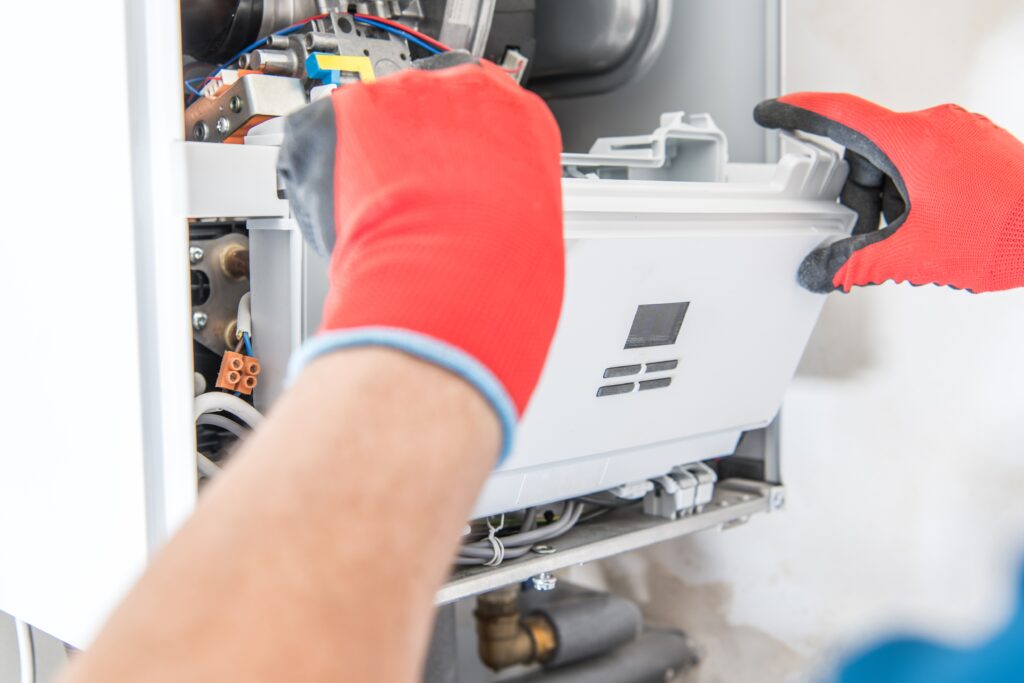
The Gas Safe registered engineer will:
- Check each gas appliance for safe operation
- Inspect the flue to confirm combustion gases are safely expelled
- Check ventilation arrangements are adequate for each appliance
- Test gas operating pressures
- Carry out a visual inspection of accessible pipework
- Check for any signs of gas leaks or combustion problems
Once the inspection is complete, the engineer will issue the CP12 certificate documenting the results for each appliance. Make sure you receive both a physical or digital copy for your records.
How Long Does It Take?
For a standard property with a boiler and one or two other gas appliances, a gas safety check typically takes 30 to 60 minutes. It can be done at the same time as an annual boiler service to save time and cost, which many homeowners and landlords choose to do.
What Happens if an Appliance Fails?
If an appliance is found to be unsafe, the engineer will classify the fault using a standard system:
| Classification | Meaning | Action |
|---|---|---|
| Immediately Dangerous (ID) | Poses immediate risk of injury or death | Appliance isolated immediately |
| At Risk (AR) | Not immediately dangerous but could become so | Strong advice to stop using, repair recommended |
| Not to Current Standards (NCS) | Does not meet current standards but not unsafe | No immediate action required, noted on certificate |
If an appliance is classed as Immediately Dangerous, the engineer will ask your permission to disconnect it. They cannot leave it in use. You will need to arrange for repair or replacement before it can be reconnected.
For landlords, any issues must be addressed before tenants can safely use the property. This is not the time to delay.
Gas Safety Certificates vs. Boiler Servicing
These are two different things, though they are often booked together:
| Gas Safety Certificate (CP12) | Boiler Service | |
|---|---|---|
| Purpose | Safety check only | Safety + performance + efficiency |
| Includes cleaning? | No | Yes |
| Includes flue gas analysis? | Basic check only | Full analysis |
| Required for landlords? | Yes, annually | Recommended, not legally required |
| Time involved | 30-45 minutes | 45-90 minutes |
A boiler service goes deeper into the condition and performance of the boiler, cleaning components and checking for wear. A gas safety check confirms the appliance is safe to use but does not include servicing. For the best outcome, having both done at the same visit makes sense.
Typical Costs in Kent
| Work | Approximate Cost |
|---|---|
| Gas safety check only (1 appliance) | £60-£90 |
| Gas safety check (3+ appliances) | £80-£120 |
| Gas safety check + boiler service | £100-£160 |
| Landlord CP12 certificate | £70-£130 |
Prices vary between engineers and can depend on the number of appliances. Booking the gas safety check alongside the annual boiler service is usually the most cost-effective approach.
FAQs
How do I find a Gas Safe registered engineer?
You can search the official Gas Safe Register at gassaferegister.co.uk. All registered engineers carry a Gas Safe ID card, which you should ask to see before any work begins. Never use an engineer who is not Gas Safe registered for gas work.
Can a boiler service replace a gas safety certificate?
No. A boiler service and a gas safety check are separate documents serving different purposes. Landlords must have a gas safety check specifically. A boiler service certificate alone is not sufficient.
My tenant says they have arranged their own gas safety check. Is that acceptable?
No. The legal responsibility rests with you as the landlord, not the tenant. You must arrange the inspection yourself with a Gas Safe registered engineer and provide the documentation. A check arranged informally by a tenant does not discharge your legal duty.
What if my tenant refuses to allow the inspection?
This is a common concern for landlords. You should write to the tenant explaining your legal obligation and request access in writing. If access is repeatedly refused despite reasonable requests, you should seek legal advice. Document everything, as you will need to demonstrate you took all reasonable steps to comply.
Do gas fireplaces need to be included?
Yes. Any gas appliance in the property must be included in the safety check. This includes gas fires, whether in regular use or not. An appliance that has not been used for a long time is not exempt.
What is the penalty for not having a gas safety certificate as a landlord?
Non-compliance can result in prosecution under the Health and Safety at Work Act. Penalties include unlimited fines and, in the most serious cases, up to 2 years in prison. If a tenant is harmed due to a gas fault that could have been identified by a safety check, the consequences can be severe. This is not an area to cut corners on.
Gas Safety Certificates in Kent
Our Gas Safe registered engineers carry out gas safety checks and boiler services for landlords and homeowners across Gravesend, Dartford, Medway, Maidstone, and the wider Kent area. We offer combined service and safety check bookings for maximum convenience.
Contact us today to book your annual gas safety check.
Also see: Gas Safety Certificates in Gravesend | Boiler Service in Dartford | How Long Does a Boiler Service Take?